Amazing Srilanka
Seminar Details
Included
- Fish Market
- Visiting Historical Churches
- A SPA Treatment
- Water Sports.
Excluded
- Health
Touring Map

Day 1 From Airport – Negombo
Relaxing at the Hotel for a couple of hours. Negombo Excursions: The wild cinnamon that grew in the region around Negombo was said to be "the very best in the universe as well as the most abundant" and for centuries attracted a succession of foreign traders and colonial powers. The first Muslim Arabs (the Moors) arrived in Ceylon in the seventh and eighth centuries and eventually came to dominate the east-western trade routes. Many chose to settle in the coastal areas and their legacy can be seen today; their descendants the Sri Lankan Moors remain the largest minority group in Negombo. The Moors' long held monopoly over the cinnamon trade, and the circuitous and largely overland route by which it was transported to Europe and the Mediterranean added greatly to its cost [3] and encouraged a Portuguese takeover in the late fifteenth and early sixteenth century.
Day 2 Negombo – Sigiriya
After Early Breakfast leaving Negombo to Sigiriya – Climbing the Rock Sigiriya is an ancient palace located in the central Matale District near the town of Dambulla in the Central Province, Sri Lanka. The name refers to a site of historical and archaeological significance that is dominated by a massive column of rock nearly 200 metres (660 ft) high. According to the ancient Sri Lankan chronicle the Culavangsha, this site was selected by King Kasyapa (477 – 495 CE) for his new capital. He built his palace on the top of this rock and decorated its sides with colourful frescoes. On a small plateau about halfway up the side of this rock he built a gateway in the form of an enormous lion. The name of this place is derived from this structure —Sīhāgiri, the Lion Rock. The capital and the royal palace was abandoned after the king's death. It was used as a Buddhist monastery until the 14th century. Sigiriya today is a UNESCO listed World Heritage Site. It is one of the best preserved examples of ancient urban planning. It is the most visited historic site in Sri Lanka. Village walking in the Evening…! After a relaxation.
Day 3 Sigiriya to Polonnaruwa - Dambulla
Polonnaruwa In the afternoon we will show you the UNESCO World Heritage list, the capital, from the 11th to the 13th century, the country's capital and seat of the king. Drive past numerous rice fields in the northern central province to Polonnaruwa. The city was from the 11th to the 13th century capital of the island in the second oldest kingdom of Sri Lanka. Featured here are the statue of the city founder Parakrama Bahu I, Tivanka with many impressive frescoes, the "holy square" with the dome Thuparama and the reliquary Vatadage, the Statue Home Lankathilake, the White Dagoba Kiri Vehara and the rock temples Gal Vihare. Admire the statues of Buddha carved out of rock - two seated in a meditating posture, a standing figure with arms crossed and a 14-meter long reclining Buddha at the entrance to nirvana. A true masterpiece of the former stonemasons. After the Lunch, visiting Dambulla Cave Temple Dambulla is a big town, situated in the Matale District, Central Province of Sri Lanka, situated 148 km north-east ofColombo and 72 km north of Kandy. Due to its location at a major junction, it's the centre of vegetable distribution in the country. Major attractions of the area include the largest and best preserved cave temple complex of Sri Lanka, and the Rangiri Dambulla International Stadium, famous for being built in just 167 days. The area also boasts the largest rose quartz mountain range in South Asia, and the Iron wood forest, or Na Uyana Aranya. Ibbankatuwa prehistoric burial site near Dambulla cave temple complexes is the latest archaeological site of significant historical importance found in Dambulla, which is located within 3 kilometers of the cave temples providing evidence of the presence of indigenous civilisations long before the arrival of Indian influence on the Island nation.
Day 4 Dambulla to Kandy
The impressive city of Kandy is located in the central mountains of Sri Lanka and has about 110,000 inhabitants. In Kandy visit a gemstone, a typical hand-held operation. The landmark of the city is the famous Temple of the Tooth (Sri Dalada Maligawa), which supposedly is the upper left canine tooth of the Buddha. . The last highlight of the day is the cultural dance show of Kandyan dancers. Temple Tooth Cultural Dance City Tour
Day 5 Kandy to Nuwara Eliya
The ‘Little England’ of Sri Lanka, is set against beautiful backdrops of Mountains, Valleys, Waterfalls and Tea Plantations. It is supposed to be one of the coldest places on the island, but is really just like an England spring day although the temperature does drop at night. All around Nuwara Eliya you will see evidence of the British influence. Houses are like country cottages or Queen Ann style mansions. Village Walking Highland Farm Strawberry Garden Horse Riding
Day 6 Nuwara Eliya to Yala
Yala National Park is the most visited and second largest national park in Sri Lanka. The park consists of five blocks, two of which are now open to the public, and also adjoining parks. The blocks have individual names such as, Ruhuna National Park (block 1) and Kumana National Park or 'Yala East' for the adjoining area. It is situated in the southeast region of the country, and lies in Southern Province and Uva Province. The park covers 979 square kilometres (378 sq mi) and is located about 300 kilometres (190 mi) from Colombo. Yala was designated as a wildlife sanctuary in 1900, and, along withWilpattu was one of the first two national parks in Sri Lanka, having been designated in 1938. The park is best known for its variety of wild animals. It is important for the conservation of Sri Lankan Elephants, Sri Lankan leopards and aquatic birds. The area around Yala has hosted several ancient civilisations. Two important pilgrim sites, Sithulpahuwa and Magul Vihara, are situated within the park. The 2004 Indian Ocean tsunami caused severe damage on the Yala National Park and 250 people died in its vicinity. The number of visitors has been on the rise since 2009 after the security situation in the park improved.
Day 7 Yala to Bentota (2 Nights Beach Stay)
Reaching Bentota Bentota can be reached by Colombo-Galle main road (A2) as well as by Colombo-Galle-Matara Southern Railway line. While the railway line from Negombo to Colombo mostly runs through the inland the continuation of the track from Colombo to Matara passing Bentota, in most of the stretch, hugs the southern coast studded with pristine tropical beaches. Importance of Bentota Bentota is the prime beach resort of the south-western and southern coastal belts of Sri Lanka. South of the city of Colombo, the city of Kalutara with its fine beach is the gateway to south western and southern bay beaches. Kalutara is the next popular beach. The Beruwala Bay Beach that is just before reaching Aluthgama at the Bentota Bridge and Bentota Bay Beach just over the bridge are the most popular twin beaches in the coast. The coast to the further south and onwards to the Deep South too is replete with lovely topical beaches. Diving at Bentota Beach The waters are usually delightfully warm; a range of scuba diving and snorkeling stores in the vicinity, the majority operated by industry certified professionals holding the PADI certification provide equipment, assistance and guidance to the diving enthusiasts. Bentota is a true dream destination for the die-hard divers. Bentota's principal dive site is Canoe Rock, where you will find sandy areas as well as sections with coral formations. Divers have the option of diving from a boat or straight from the shore, with the former being more popular and perhaps more exciting. A night dive is a good option for the enthusiast who craves adventure. Crucially, the majority of diving operators take supplies of pure oxygen with them to counter the risk of decompression Beach Relaxation. Water Sports. Volley Ball. Spa Treatment. Shopping
Day 9 Bentota to Colombo
Refreshing at Hotel
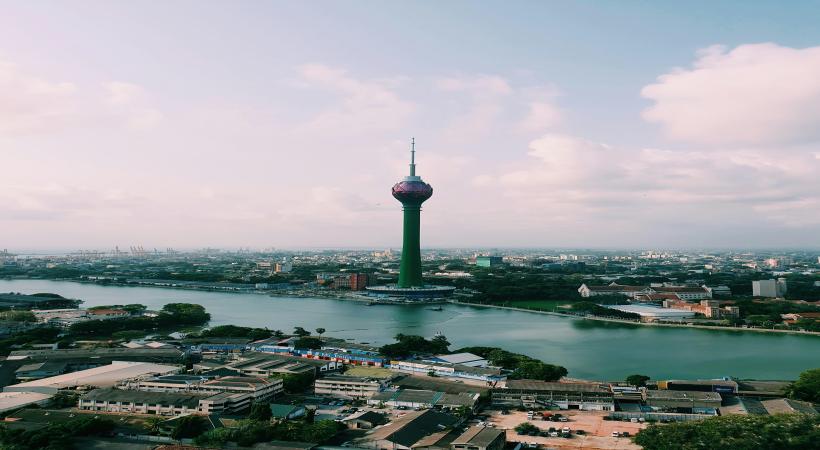
Day 10 Colombo Tour.
A City tour in the Heart of Sri Lanka
5
4
3
2
1
Please login to add rating!

Rs20,000.00 Rs
- Start Time 2025-09-25 12:12 AM
- Return 2025-09-30 12:12 AM
- Total Capacity 300 Persons